
Introduction
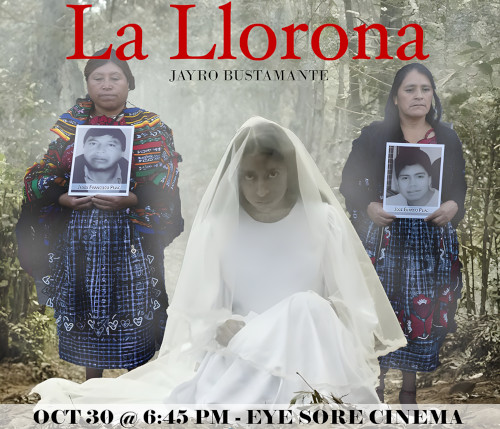
My wife (who was born in Guatemala) and I went to see the film La Llorona last night. The showing of the film was sponsored by The Leo Panitch School for Socialist Education and the Socialist Project. Here is what the advertisement says:
FilmSocial Presents: La Llarona
Wednesday, October 30 / 7:00 pm – 9:00 pm EDT
The Leo Panitch School for Socialist Education and the Socialist Project present La Llorona as the next film in our ongoing FilmSocial series.
La Llorona (Guatemala, 2019.) is the modern re-imagining of the Mexican and Central American folktale about a vengeful ghost who roams near bodies of water mourning her dead children whom she killed after discovering her unfaithful husband. Director and screenwriter Jayro Bustamante places the legend inside contemporary Guatemala at a particularly turbulent time. Retired Guatemalan general Enrique Monteverde is being tried for orchestrating a brutal genocide against native Mayans in the 1980s. Now elderly and ailing he lives comfortably with his wife, daughter, and granddaughter, but is haunted by his past.
This is the third film in our special series exploring the topic of imperialism. Jayro Bustamante uses La Llorona as a way to explore Guatemala’s violent and racist history. The ramifications of the Spanish colonization of Guatemala is still felt today in its race and class struggles. The movie is based on the real events surrounding the presidency of José Efraín Ríos Montt from 1982 to 1983 where he oversaw one of the bloodiest periods in the Guatemalan Civil War. Efraín Ríos Montt was convicted of genocide and crimes against humanity in 2013 for the systematic massacre of indigenous communities under the guise of fighting communist insurgents. The verdict was overturned days later.
The film will be followed by a short presentation and general discussion on the politics and implications of the film’s subject today.
Review
My wife and I found the film rather disappointing. Firstly, it was rather slow in many parts. Apparently, this was supposed to contribute to the dramatic elements near the end of the film (the revelation of how the General Monteverde (aka Rios Montt) ordered the drowning of Alma’s children unless she (portrayed surrealistically by his wife) revealed where guerrilla leaders were located.
I was in Guatemala in 1980, and in 1981, and either 1982 or 1983 (a if I remember correctly). I did not personally witness any killings. However, there was definitely an atmosphere of repression. When for example, in 1980, I naively tried to talk politics publicly in the plaza in Quetzaltenango where I was studying Spanish (locally known as Xela), a man replied: “Not here.” Travelling on chicken buses, the Guatemalan army would stop the buses on occasion, and all men, including myself, had to get off and have our arms over our heads while the military checked our identification. The military definitely treated the indigenous riders more gruffly than me.
The film does not delve into the oppressive atmosphere of those times, where students, union leaders and anyone suspected of being involved in any form of leftist politics were persecuted (the song Guatemala by Peter Sears, on the other hand, contains images of those times: see https://www.youtube.com/watch?v=yHUldtdIUK8).
Certainly, the idea of justice and the need for those who have suffered injustice requiring a voice finds expression in the film. However, the surreal nature of the film (the haunting and the reactions of Montevideo and his family) detract from the real suffering on a mass scale which occurred and from the need for real voices that not only acknowledge such oppression and suffering but seek, once and for all, to eliminate the possibility of such suffering and oppression (through socialism).
Another problem with the film is the hints at guilt supposedly felt by Monteverde, his wife and his daughter. Although I understand the idea of poetic licence and that fiction is not history, still, the presentation of guilt by the dictator and, especially his daughter, is nothing less than an idealized version of humanism. It is highly doubtful that the real Rios Montt felt a shred of guilt (as an evangelist, he would go on television and describe military operations against communists in a holy war).
Indeed, in real life, as my wife informed me, Zury Rios, Rios Montt’s real daughter, defended her father’s legacy. Here is what it says about her in Wikipedia:
Zury Mayté Ríos Sosa (born 24 January 1968) is a Guatemalan former politician. She is the daughter of the late general, and President of Guatemala Efraín Ríos Montt.
She began her political career with her father, whom she defended against accusations of genocide against him. She served four terms in Congress, from 1995 to 2012, where she was chair of the Foreign Relations Committee. She also served on the Steering Committee of the Inter-Parliamentary Union (IPU) and was the chair of the IPU’s Latin American Group where she was elected unanimously by parliamentarians from the Latin American nations. Zury was the presidential candidate for the party VIVA at the 2015 elections
…
In 2003, prior to the election, Zury Ríos was accused of being one of the organizers of jueves negro (“Black Thursday”).[5] In mid-2003, the FRG was again trying to get General Ríos Montt on to the presidential ticket by arguing that applying the constitutional ban preventing former coup leaders from seeking the presidency should not apply to him in accordance with the principle of non-retroactive application of the law. His 1982 coup d’état had preceded the enactment of the 1985 Constitution. After a series of court decisions ruling alternately that he could or could not run, culminating with a 21 July 2003 ruling by the Supreme Court suspending his candidacy, on Thursday, 24 July, FRG officials and supporters led a mass demonstration in Guatemala City to protest his disqualification. The demonstration degenerated into a bloody riot that left one man dead (journalist Héctor Fernando Ramírez) but was perceived as having been successful in forcing the decision to be made to put Ríos Montt’s name on the presidential ballot since a week later, the Constitutional Court of Guatemala overturned the Supreme Court’s ban.
Although General Ríos Montt ultimately lost the November 2003 election, he enjoyed his daughter’s full support. Zury Ríos accompanied her father on his campaign trail, generally introducing him, in highly favorable terms, before he addressed his rallies. She was quoted in the press as saying, “my father is my inspiration.”[6]
…
Political positions
[edit]
Ríos claims her father’s political legacy. She is popular with the conservative evangelical electorate and has the support of the army and big business.[8]
She promises a particularly aggressive security policy against gangs and social organisations involved in conflicts with landowners.[7]
She also advocates the implementation of policies expected by conservative evangelicals on issues such as abortion.[7]
She defended the dissolution of the International Commission against Impunity in Guatemala (CICIG), which was investigating corruption in the political class.[7]
The presentation of the daughter as having doubts about her father’s innocence is indeed poetic licence–excessive poetic licence in my view.
Another silence in the film was the role of the United States in contributing to the genocide.
A Conversation That Was Not
After the film, there was supposed to be a discussion about the film. The film was the third in a series of showings on imperialism.
I was unsure whether I would participate in such a discussion. Those who represented the Leo Panitch School for Socialist Education and the Socialist Project indicated that the discussion would take place in five minutes. I waited for almost ten minutes–and then left with my wife. I find that I have to drag myself to such events these days, and when I have to wait even longer than normal, I simply become impatient and feel like leaving.
There were perhaps between 30 and 40 people in attendance.
If I had participated in a discussion, I would have wanted to address an issue that had emerged after the genocide and that has relevance for the actions of Hamas on October 7, 2023: Should the leftist guerrilas have engaged in organized combat with the Guatelaman military? There have been arguments that they vastly underestimated the reaction of the Guatemalan military to their actions. On the other hand, is there not a point where people are justified in saying: “Enough is enough.” And what could have been done in a such a situation?
Another question would have been: How can such a film be connected to struggles here in Canada and elsewhere for an end to the class power of employers? Terms such as “imperalism” and “capitalism” are so vague for most people. How can such real experiences hit home and connect to experiences of the working class here in Canada and elsewhere in such a way that motivate action to end such class power?
In any case, I will leave the reader with an alternative, positive review of the film, that contrasts with what we experienced (from https://notevenpast.org/film-review-la-llorona-directed-by-jayro-bustamante/):
Film Review: La Llorona, Directed by Jayro Bustamante
The legend of La Llorona is ubiquitous in Latin America. The tale typically centers on a woman who, upon learning of her husband’s infidelity, drowns their son and daughter in a moment of madness. She soon realizes what she has done and drowns herself in a river. Despite her contrition, she is unable to enter heaven and wails incessantly throughout the night. For this reason, she is known as La Llorona, the weeping woman.
In Jayro Bustamente’s 2019 film adaptation, La Llorona cries for her children once more. But rather than being killed by their own mother, the Guatemalan director foregrounds Enrique Monteverde (Julio Díaz), a former Guatemalan general during the nation’s civil war, as the perpetrator.
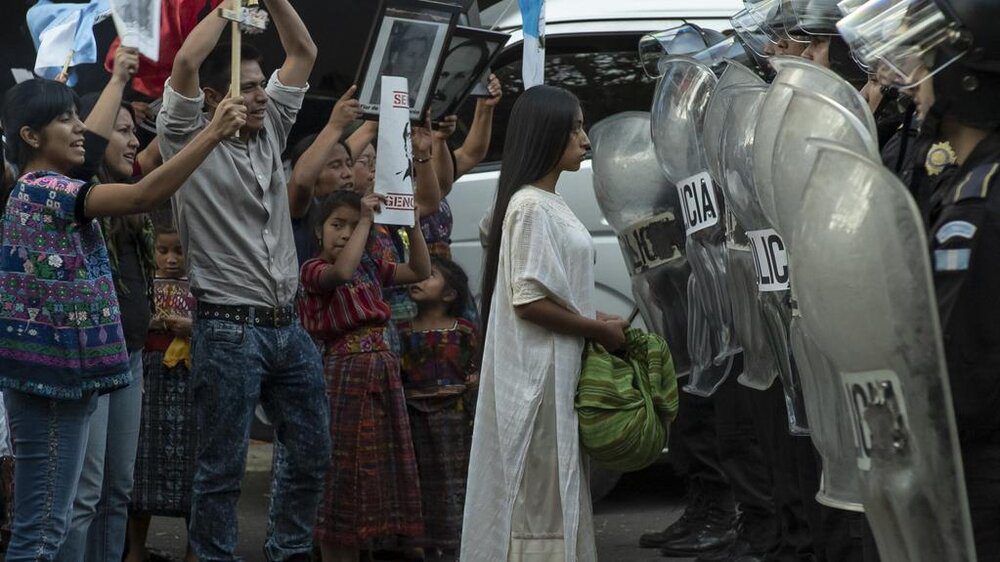
As the defeated Monteverde and his family await the patriarch’s sentencing in their mansion, Bustamante’s La Llorona enters the picture. Alma (María Mercedes Coroy), an almost spectral Maya woman, arrives at the front door after wading through a crowd of demonstrators celebrating the guilty verdict outside. She requests work since the house’s servants have all resigned due to the former general’s increasingly erratic behavior. Distracted by Monteverde’s conviction, the family hires the woman as a housemaid despite knowing little about her.
When Alma starts her job, Bustamante unravels Monteverde’s sinister past, and the horrors of the Guatemalan Civil War, with increasing detail. The former general’s history of sexually abusing indigenous women, for example, surfaces as the otherworldly Alma compels the depraved man to watch her as she dries off in the bathroom. When the family discovers Monteverde aroused by Alma, his daughter Natalia (Sabrina De La Hoz) and granddaughter Sara (Ayla-Elea Hurtado) look at him with utter disgust. The following morning, Sara mysteriously tells her mother that Alma’s two children died. Bustamante juxtaposes these surreal scenes with slow shots of Monteverde chasing voices of wailing women down the mansion hallway with a gun. In the process, he prompts viewers to wonder if Alma has possessed the former general in retribution, or if the woman’s sheer presence has caused him to unravel from long-standing guilt.
María Mercedes Coroy as Alma walks toward police in a still from the film.Regardless, Monteverde and his family’s hallucinations only become more vivid the longer Alma resides in the mansion. Bustamente’s llorona eventually possesses Monteverde’s wife Carmen (Margarita Kenéfic), who previously denied her husband’s invidious history. “The past is the past,” she had claimed, “[and] if we turn around, we’ll turn into salt sculptures.” The older woman is then forced to live the murder of Alma’s children as though they were her own. Here, Bustamante’s choice to foreground Guatemalan elites’ confrontation with the war, rather than indigenous victims’ physical suffering, helps prevent watchers from being unwittingly transformed into voyeurs of violence.
Ultimately, La Llorona is an engrossing interpretation of the famous folk legend. Bustamante’s follow-up to Ixcanul (2015) and Temblores (2019) —which addressed similarly fraught topics — uncovers the civil war’s indelible imprints on Guatemalan society. His use of magical realism evinces how indigenous victims remain profoundly impacted by the army’s counterinsurgency and how perpetrators have repressed their guilt. Although Alma herself perhaps demanded more characterization, her role largely stands as a representation of the war’s victims. Her hauntings of the elite family reveal that the past is not even past in Guatemala. And only by allowing suffering to speak, or wail, will justice be realized.

 The Abolitionary